Space Hats
New Member
- Messages
- 3
- Reaction score
- 5
Heya, first post here.
For like 10+ years, at least since I was 14 or so playing hundreds and hundreds of hours of KSP, Factorio, Rimworld, and others, getting interested in planetology, astrobiology, exoplanets, stellar evolution, orbital mechanics & trajectory optimisation, ISRU, MOE..., and so on, I've been dreaming (and making stupid little spreadsheets and design documents every few years) of making my dream automation-colony-sim-hard-scifi-space-4x-all-you-can-eat.
I’ve tried a few times over the years to make it (Kepler playgrounds in JS were my first real foray into coding after they taught us scratch (lol), N-body tests, system generator prototypes in C++ SFML, struggling with Unity & other engines…). Those attempts kinda burnt out on their own over the years. I saw BRUTAL (from the rimworld update xd), and a friend had given me a week free of claude code (which I’d never tried before now, and I gave in and coughed up the money once I ran out), and realised I could probably start making something solo and actually get somewhere interesting along the way to my possibly-unreachable insane scope.
I say “hard-scifi,” but that’s a theme and not a rule, though my current vision is that players may have to build and evolve their organization over some millenia to get past the types of things you might see in Nertea’s wonderful KSP mods, at least on default settings.
The plan is an inbuilt launcher, mod manager & instance manager (open source), and paid closed source core game (dn/ILspy my beloved), data-driven design with everything that can come from readable json content files & registries for code mods, inbuilt patching system for json (json patch standards ive looked at don't really work for this). Special relativity (FTL allowed under a preferred inertial frame model w/ enforced no-retrocausality, many distinct FTL methods), building & automation of solar-system scale economies (for a few centuries), then interstellar (for millenia more), then FTL comms and travel much, much later or when lucky/on different game settings. Colony building, terraforming, ... Support for less-4xlike, more colony or trading sim-like gameplay in some prebuilt scenarios, and so on. I want to keep it really performant by doing lots of layered abstraction and deterministic "Just-in-time presentation" of economy, government, colony, logistics, etc. systems, AI/opponent actions, and so on.
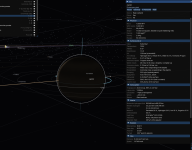
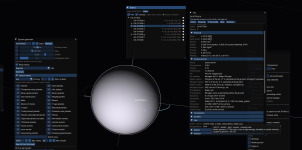
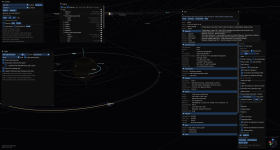
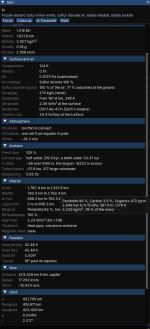
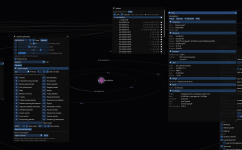
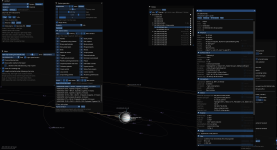
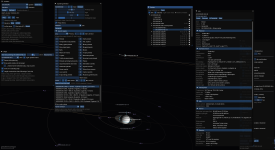
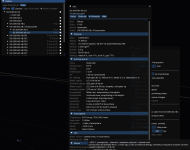
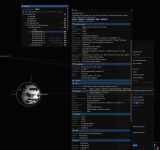
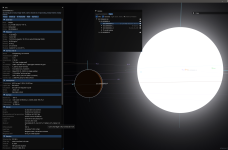
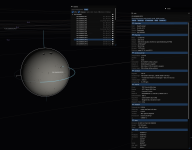
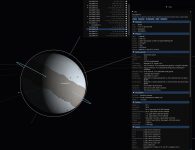
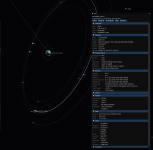
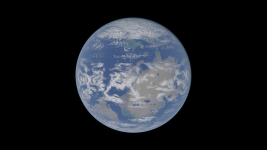
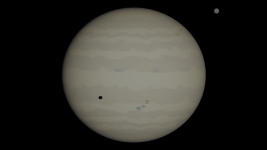
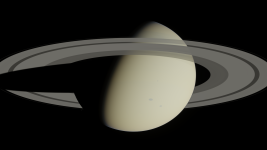
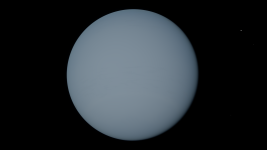
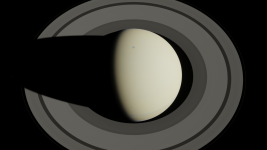
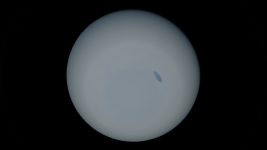
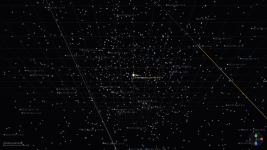
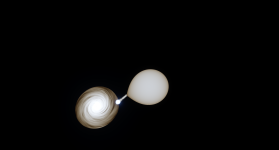
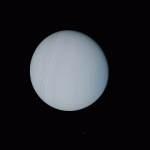
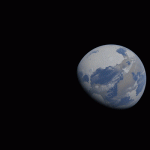
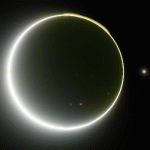
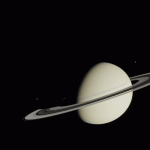
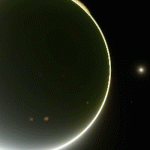
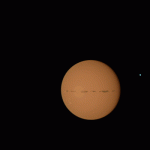
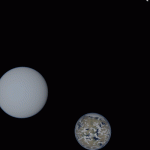
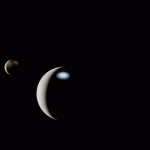
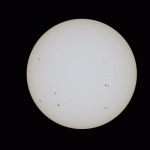
Some screenshots related to the generator and a long unedited video with some captions below that you can watch if you've got time to waste.
Given the aforementioned insane scope, you might have some doubts that anything will ever be released. I've been going full steam ahead for a few weeks, but. Well, good news, even if it doesn’t, I’m on track to make at least one contribution to the public good soon, that other people may actually be interested in, I think:
A very robust celestial generator, “All Your Worlds Generator” or AYW-generator for short (unless I change the name).
Feature highlights in generator.md.txt (too long for character limit lmao)
Because of the truly staggering amount of wonderful public work that goes into all the research behind something like the generator, I thought making it open source might be a good idea as well, so that’s the plan, especially since there seem to be few such projects of this scope that also stay lightweight (maybe spaceengine, to some extent?). The generation model has no BRUTAL dependency (main game does, if it isn't obvious.) Current plan is to share generation code under MPL 2.0, along with needed data in a repo in a few weeks (as an early version), after things get added that might break seed-continuity with future versions a bit too much and some issues are fixed, plus some additions. Will likely come with an adapter for KSP's Kopernicus (generator into cfg files as a baseline for further editing), and a KSA adapter/mod. I really want to see what these bodies look like with what KSA is doing with rendering (though I'm planning on doing some work on my own on that front, I don't think I'll be able to hold a candle to Blackrack). Imagine flying above a supercritical water-steam world, co2 ice clouds condensing out as virga just above you...
Screenshots, notes in alt text:
 Longish unedited video of astray + generator. English CC has some notes.
For like 10+ years, at least since I was 14 or so playing hundreds and hundreds of hours of KSP, Factorio, Rimworld, and others, getting interested in planetology, astrobiology, exoplanets, stellar evolution, orbital mechanics & trajectory optimisation, ISRU, MOE..., and so on, I've been dreaming (and making stupid little spreadsheets and design documents every few years) of making my dream automation-colony-sim-hard-scifi-space-4x-all-you-can-eat.
I’ve tried a few times over the years to make it (Kepler playgrounds in JS were my first real foray into coding after they taught us scratch (lol), N-body tests, system generator prototypes in C++ SFML, struggling with Unity & other engines…). Those attempts kinda burnt out on their own over the years. I saw BRUTAL (from the rimworld update xd), and a friend had given me a week free of claude code (which I’d never tried before now, and I gave in and coughed up the money once I ran out), and realised I could probably start making something solo and actually get somewhere interesting along the way to my possibly-unreachable insane scope.
I say “hard-scifi,” but that’s a theme and not a rule, though my current vision is that players may have to build and evolve their organization over some millenia to get past the types of things you might see in Nertea’s wonderful KSP mods, at least on default settings.
The plan is an inbuilt launcher, mod manager & instance manager (open source), and paid closed source core game (dn/ILspy my beloved), data-driven design with everything that can come from readable json content files & registries for code mods, inbuilt patching system for json (json patch standards ive looked at don't really work for this). Special relativity (FTL allowed under a preferred inertial frame model w/ enforced no-retrocausality, many distinct FTL methods), building & automation of solar-system scale economies (for a few centuries), then interstellar (for millenia more), then FTL comms and travel much, much later or when lucky/on different game settings. Colony building, terraforming, ... Support for less-4xlike, more colony or trading sim-like gameplay in some prebuilt scenarios, and so on. I want to keep it really performant by doing lots of layered abstraction and deterministic "Just-in-time presentation" of economy, government, colony, logistics, etc. systems, AI/opponent actions, and so on.
Some screenshots related to the generator and a long unedited video with some captions below that you can watch if you've got time to waste.
Given the aforementioned insane scope, you might have some doubts that anything will ever be released. I've been going full steam ahead for a few weeks, but. Well, good news, even if it doesn’t, I’m on track to make at least one contribution to the public good soon, that other people may actually be interested in, I think:
A very robust celestial generator, “All Your Worlds Generator” or AYW-generator for short (unless I change the name).
Feature highlights in generator.md.txt (too long for character limit lmao)
Because of the truly staggering amount of wonderful public work that goes into all the research behind something like the generator, I thought making it open source might be a good idea as well, so that’s the plan, especially since there seem to be few such projects of this scope that also stay lightweight (maybe spaceengine, to some extent?). The generation model has no BRUTAL dependency (main game does, if it isn't obvious.) Current plan is to share generation code under MPL 2.0, along with needed data in a repo in a few weeks (as an early version), after things get added that might break seed-continuity with future versions a bit too much and some issues are fixed, plus some additions. Will likely come with an adapter for KSP's Kopernicus (generator into cfg files as a baseline for further editing), and a KSA adapter/mod. I really want to see what these bodies look like with what KSA is doing with rendering (though I'm planning on doing some work on my own on that front, I don't think I'll be able to hold a candle to Blackrack). Imagine flying above a supercritical water-steam world, co2 ice clouds condensing out as virga just above you...
Screenshots, notes in alt text:




 ):